
"Ethiopian bean varieties"
3000 article(s) found

Introduction to the taste of grinding scale for sweet Ethiopian coffee bean flavor description
Ethiopian beans are easily recognizable, mostly small and pointed long beans, known as longberry, and often mixed with small oval-shaped short beans, called shortberry, which look uneven in size and appearance. The commercial bulk beans of Grade4 or Grade5 are mostly mixed with hundreds of different crystal seeds in different producing areas, so the phenomenon of uneven bean phase is the most obvious.

Flavor description of Ethiopian Coffee beans introduction to Grinding scale of varieties in producing areas
Grade of Ethiopian coffee: Ethiopian washed coffee Yega Chuefei G1 G2 Sidamo (Yirgacheffe, Sidamo) has the highest grades 2 and 3 (G2, G3), while sun-processed coffee in eastern Ethiopia is mostly grade 4 or 5 (G4, G5). In many cases, level 4 coffee is marked as level 5 in order to reduce taxes. At present, the classification is not uniform and there are

Exquisite Ethiopian coffee beans Starbucks Ethiopian coffee
Ethiopia has unique natural conditions suitable for growing all imaginable varieties of coffee. As a upland crop, Ethiopian coffee beans are mainly grown in areas between 1100 and 2300 meters above sea level, roughly distributed in southern Ethiopia. Deep soil, well drained soil, weakly acidic soil, laterite and soil are soft and contain

Introduction to the appearance characteristics of Ethiopian Coffee
Ethiopian beans are easily recognizable, mostly small and pointed long beans, known as longberry, and often mixed with small oval-shaped short beans, called shortberry, which look uneven in size and appearance. The commercial bulk beans of Grade4 or Grade5 are mostly mixed with hundreds of different crystal seeds in different producing areas, so the phenomenon of uneven bean phase is the most obvious.

Introduction to the taste characteristics of varieties treated by flavor description of Ethiopian Sidamo coffee beans
Introduction to the taste characteristics of the Ethiopian Sidamo coffee bean flavor description method Korate won the first place in the Ethiopian limited cup sun exposure group with a score of 91.9. the overall flavor is quite similar to the first prize in last year's limited cup sun exposure group-Amaro Gayo. The dried aroma after grinding is dominated by very sweet blueberry aromas with rising floral aromas and a hint of cinnamon.

Introduction to the Variety Grinding scale of the Flavor description method in the producing area of Ethiopian Fine Coffee Manor
Ethiopian boutique coffee manor producing area flavor description method variety grinding scale introduction to the well-known professional coffee website Dear Coffee, I Love You author Brian Jones Kenya coffee history is not long, the beginning of the 20th century began to introduce Arabica coffee varieties, and then to cultivate more Bourbon varieties from Brazil. In the early British colonial period, Kenny

Ethiopian coffee beans| Ethiopian coffee producing areas| Guji Kaiyong Mountain Single Farm
Professional coffee knowledge exchange More coffee bean information Please pay attention to coffee workshop (Weixin Official Accounts cafe_style) Ethiopia Guji Kayon Mountain Farm NaturalWashedEthiopia Guji Kayon Mountain Farm NaturalWashedEthiopia Oromia Region

Introduction to the characteristics, Analysis and quality of Ethiopian Coffee
Ethiopian beans are easily recognizable, mostly small and pointed long beans, known as longberry, and often mixed with small oval-shaped short beans, called shortberry, which look uneven in size and appearance. The commercial bulk beans of Grade4 or Grade5 are mostly mixed with hundreds of different crystal seeds in different producing areas, so the phenomenon of uneven bean phase is the most obvious.

Good average quality; aromatic and full-bodied Ethiopian coffee plantation taste characteristics
Ethiopian coffee beans grow in a near-natural environment. After years of cultivation under the same growing conditions, Ethiopian coffee beans have gradually adapted to the environment here. More than 60% of coffee beans are forest or semi-forest grown coffee. Coffee farming villages produce about 35 percent of the country's coffee.
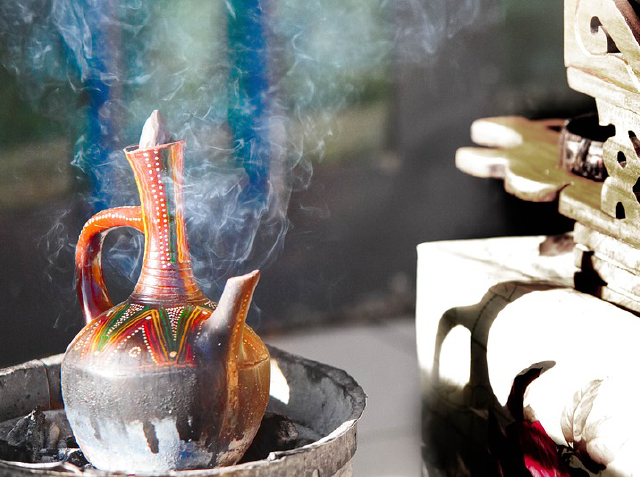
Classification and Flavor characteristics of Ethiopian Coffee Bean Heirloom varieties introduced in Ethiopian Fine Coffee producing areas
Ethiopia, the birthplace of coffee, has a number of boutique coffee producing areas, producing popular high-quality coffee beans, such as Yega Xuefei, Guoding Ding Ding, Sakui and so on. Each producing area will have its own flavor characteristics. Follow Qianjie Coffee to learn about it.

Flavor description of Ethiopian Xachiso Coffee Bean introduction to the varieties in the manor area
Ethiopian Chachiso Coffee Bean Flavor describes the variety produced in the manor area to introduce the Ethiopian Buna ceremony is a long process, with an average of about 1.5 hours. The ceremony, which takes place every day, aims to come to the conclusion that it may be a marriage proposal or a mediation of family conflict. The first is roasted coffee beans. When the coffee beans are roasted, the woman

How to deal with the processing of Ethiopian single bean? how to divide the grade of Ethiopian single bean?
Professional barista exchanges please follow the coffee workshop (Wechat official account cafe_style) the world-famous Ethiopian coffee are: 1. Limu coffee grows between 1400 meters and 2000 meters above sea level. Wash the coffee. Excellent quality, with strong nut aromas, suitable acidity, with the intensity of wine. The annual output is 29000 tons. 2. Jima coffee grows at an altitude of 140.

Ethiopian Sidamo G1 Coffee Bean Flavor Description Grind Scale Variety Region of Origin
Flavor description of Ethiopian Sidama g1 coffee beans Ground scale varieties The production area Shakisso/Shakiso is located in the Guji region of Sidama, south of the Oromia region, next to Sidama and Gedeo. There are many mines in this area, which were used for gold mining in the early days, so there are many potholes in this coffee-growing area. This makes people

Introduction to the varieties of Ethiopian Honey Kiss Coffee Flavor description Grinding scale treatment
Ethiopian Honey Kiss Coffee Flavor description Grinding scale treatment varieties of world-famous Ethiopian coffee are as follows: 1. Limu coffee grows between 1400 meters and 2000 meters above sea level. Wash the coffee. Excellent quality, with strong nut aromas, suitable acidity, with the intensity of wine. The annual output is 29000 tons. 2. Jima Coffee grows from 1400 meters above sea level to

Introduction to the Flavor description treatment of Ethiopian Sidamomo Lion King Coffee Variety characteristics
Ethiopian coffee Ethiopian coffee Ethiopia washed coffee Yega Xuefei G1 G2 Sidamo (Yirgacheffe, Sidamo) is the highest grade 2 and 3 (G2, G3), while the sun-processed coffee in eastern Ethiopia is mostly grade 4 or 5 (G4, G5). In many cases, level 4 coffee is marked as level 5 in order to reduce taxes. At present, the classification is not uniform and a little messy, because

Ethiopian TOH Champion Coffee | introduction of Ethiopia aricha Adorsi processing plant |
Professional coffee knowledge exchange more coffee bean information please follow coffee workshop (Wechat official account cafe_style) Yega Xuefei is a small town in Ethiopia, elevation 1700-2100 meters, is one of the highest coffee producing areas in the world, is also synonymous with Ethiopian boutique coffee. Lake Turkana, Lake Abaya and Lake Chamo bring rich water vapor here. To fog valley

Flowers and honey sweet Ethiopian coffee Ethiopian flavor sidamo products
At present, there are many native forests of coffee in Ethiopia, which can be said to be a gene pool of coffee, and this gene pool will be the solution to many coffee problems. Ethiopian coffee beans are of high quality and have a wide variety of flavors, and few countries are second to none. As for the treatment of raw beans, some places are insolated, some are washed, and both are used.

Variety characteristics of fermented Natural Solar Ethiopian Coffee introduction to Fine Coffee Bean in Manor
Ethiopia has unique natural conditions suitable for growing all imaginable varieties of coffee. As a upland crop, Ethiopian coffee beans are mainly grown in areas between 1100 and 2300 meters above sea level, roughly distributed in southern Ethiopia. Deep soil, well drained soil, weakly acidic soil, laterite and soil are soft and contain
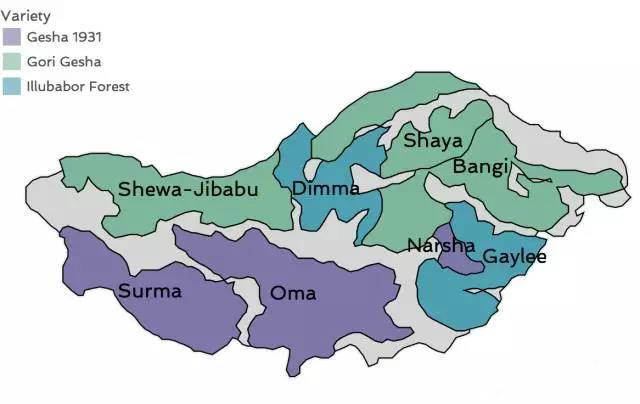
The history of the development of Zuoxia Village-what is the difference between Di Roxia Village and ordinary Ethiopian manors?
In 1931, a team of botanists visited southern Ethiopia and found a species of rose beans near the village of Gesha, with tall trees and larger seeds than ordinary Ethiopian beans. They took the seeds to Kenya, planted them in nurseries and grew up five years later. They took the fruits from the healthiest samples and brought them to Uganda and Tanzania. one hundred and ninety five

Introduction to the characteristics and Flavor of Ethiopian Coffee beans
Professional coffee knowledge exchange more coffee bean information please follow the coffee workshop (Wechat official account cafe_style) front street-Heirloom coffee introduction when we talk about Ethiopian coffee, some people will use jasmine, rose fruit, magnolia and other words to describe the fragrance of flowers, but you have been curious